
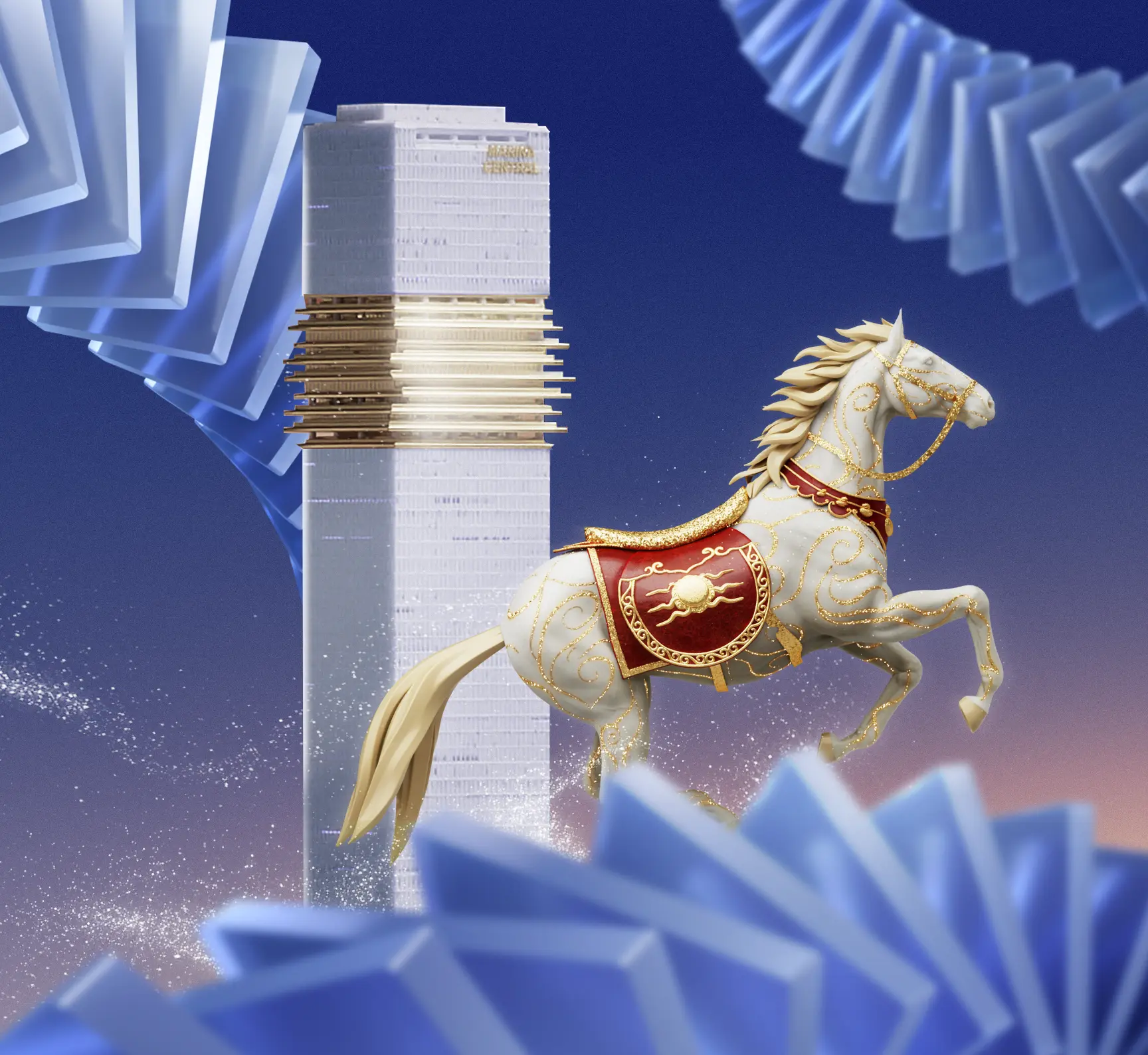
Saigon Marina IFC operates as a pioneer cultural incubator for the Vietnamese creative economy and emerging talents.
This marks the first-of-its-kind collaboration between Saigon Marina IFC and the Vietnamese creative community to trial an immersive experience onsite for the public, activating the site as a living cultural platform.
The current program comprises:
15 individual contemporary artists and creatives
Multiple interdisciplinary production teams
2 civic-scale sculptures
1 large-scale building facade activation
2 multimedia visual works
Together, these works reposition private urban assets as long-term cultural infrastructure, contributing materially and meaningfully to Vietnam's creative economy.
Introduction
"GIAO LỘ THỜI GIAN"
The Ba Son to
Saigon Marina IFC
Continuum
"Giao Lộ Thời Gian" approaches time not as a closed line, but as a living continuum: an active system that carves out space, dictates behavior, and fuels urban imagination.
The White Horse emerges from an ancient riddle: how do we build something that lasts?
The answer lies not in static permanence, but in continuity; not through domination, but through attunement.
Across the exhibition, image, structure, and motion oscillate between digital and physical, distant and near. The work defies a singular vantage point. Instead, visitors encounter a series of fragments, conditioned by their own position and momentum. Each perspective offers a mere slice of a collective experience unfolding in tandem across the exhibition's matrix. There are no pre-packaged resolutions. Clarity is found only through participation—in the capacity to move, to adapt, and to harmonize with the city's pulse.
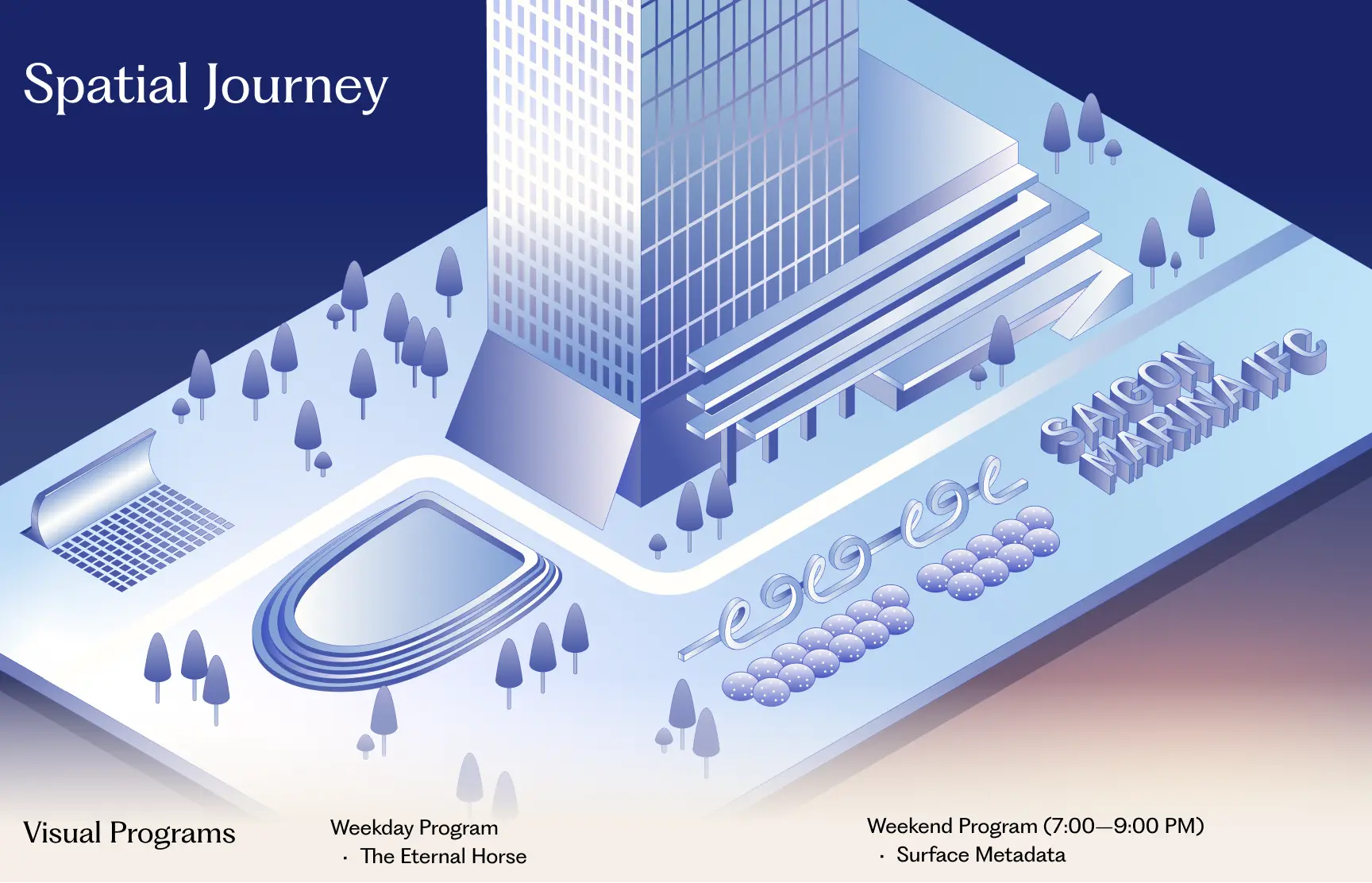
From the city's façade to ground-level encounters, overlapping timelines converge. The Eternal Horse (visual Piece 1) stabilizes the myth, anchoring it so it may be perceived anew. Surface Metadata (Visual Piece 2) returns time to the touch, keeping the narrative alive through use and interaction. Here, meaning does not resolve but accumulate.
Together, they refuse nostalgia and insist on presence. The White Horse does not guide us through history. This is not an exhibition about what was built. It guides us through time itself.
And time, in this universe, remains open through us.
Curatorial statement
"Giao Lộ Thời Gian" – The Ba Son to Marina IFC Continuum frames the exhibition as a civic and temporal crossing point, tracing the transformation of Saigon Ba Son from an industrial shipyard to a contemporary urban landscape shaped by speed, youth, and future projection. Saigon Marina IFC stands proudly as the culmination of contemporary Vietnamese creative intelligence. It positions the site not as a backdrop, but as an active participant in the work.
Within this continuum, The White Horse, or the Architecture of Continuity functions as a conceptual lens. Drawn from fable and reactivated through contemporary form, the White Horse reflects a shift in how endurance is understood: not as permanence, but as the ability to survive erosion, repetition, and change without losing coherence.
The exhibition resists linear narrative. Instead, it unfolds as a field of fragments in which digital and physical elements fracture into one another, producing moments of temporal dissonance. Viewers do not receive a complete image. They experience partiality, accumulation, and overlap. Clarity emerges not through resolution, but through acceptance of dissonance.
At its core, the exhibition asks not where we are going, but how we are already moving. The future is not presented as a distant horizon. It is continuously woven through everyday gestures, decisions, and omissions. The White Horse does not lead the way forward. It marks the fact that we are already in motion.
Đại Đại
2026
The project unfolds along a continuous axis connecting 03 key sites
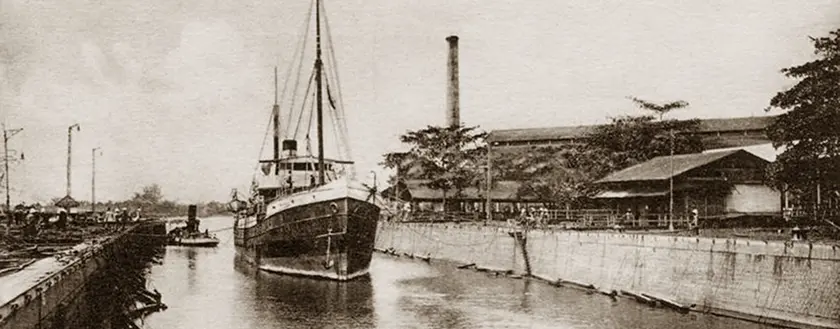
Ba Son Old Shipyard
A reservoir of accumulated historical density
Ba Son is one of the oldest industrial sites in Saigon. Its origins trace back to the late 18th century, when the Nguyễn Lords established a naval workshop here to build and repair ships for the southern frontier. In 1863, under French colonial rule, the site was formalized as the Arsenal de Saigon, becoming the most important naval shipyard in Indochina.
For more than 130 years, Ba Son served as a strategic industrial backbone, producing and maintaining vessels for both colonial and later national use. It witnessed regime changes, wars, and the modernization of Vietnam's maritime and mechanical industries. The shipyard ceased operations in 2015, marking the end of an era of heavy industry along the Saigon River.
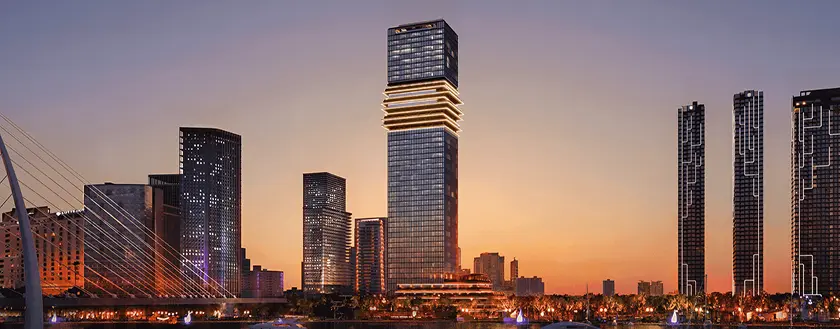
Saigon Marina IFC
A locus of contemporary creative intelligence and financial prosperity
Rising on the former Ba Son site, Saigon Marina IFC represents a decisive shift from industrial production to financial and creative capital. Developed in the late 2010s–2020s, the building sits at the intersection of riverfront urbanism, global finance, and cultural reprogramming.
Positioned between District 1 and Thủ Thiêm, Marina IFC functions as a new interface between Vietnam's economic ambition and its global presence. The building is not isolated from history; it occupies reclaimed ground where shipbuilding once defined the city's relationship with the world. Its architecture and scale signal Vietnam's transition into a service- and knowledge-driven economy, positioning Saigon as a core driver in the evolution of an iconic metropolitan hub. Yet, for all its global scale, the structure remains physically anchored to one of the city's most charged historical sites—from heritage to future, Saigon Marina IFC is the heartbeat of Saigon.
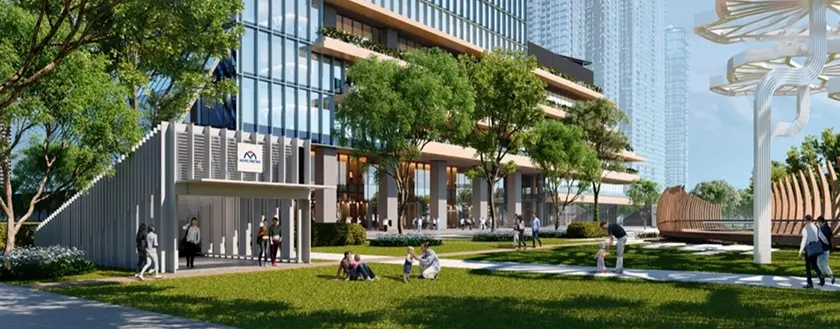
Ba Son Metro Station
Collective Motion toward the future
Ba Son Metro Station is part of Metro Line 1 (Bến Thành – Suối Tiên), Ho Chi Minh City's first urban rail line. Construction of Line 1 began in 2012, following decades of planning, and entered trial operations in 2023–2024, marking a major milestone in the city's transport history.
As a Transit-Oriented Development (TOD) node, Ba Son Station anchors high-density, walkable urban growth and reduces reliance on road-based transport. It represents a shift in how the city moves, gathers, and expands. Where Ba Son Shipyard once launched ships outward, the metro now moves people inward and across, reshaping daily life at a metropolitan scale.
Catalogue Essay
The White Horse,
or the Architecture of Continuity
On building "Giao Lộ Thời Gian" —
the Ba Son to Saigon Marina IFC continuum exhibition
How do we build something that lasts?
In its original context, this was not a poetic inquiry. It was architectural, political, and existential. Longevity did not mean permanence. It meant continuity — the ability for a structure, an idea, or a people to survive erosion, repetition, and change without losing coherence.
In this exhibition, that ancient answer returns with a quieter violence. The White Horse no longer offers resolution. Instead, it destabilizes certainty. It refracts the past into the present, posing new questions rather than delivering guidance. Who are we, really, within the systems we inherit? And where do we go from here, when momentum itself has become automatic?
The Horse in Motion
The exhibition introduces White Horse as an eternal traveler. Emerging from the northern mist, the horse moves through geological strata and ancient patterns, accelerates alongside contemporary interpretations of Ba Son, and rises into the modern skyline. Its movement remains aligned with the city never elevated above it, never detached from it.
Visually, the form carries the material memory of the original statue while undergoing digital refactoring. The tension between inheritance and projection is preserved, unresolved. Here, dream functions as orientation, a way of sensing direction before structure hardens.
Piece 1
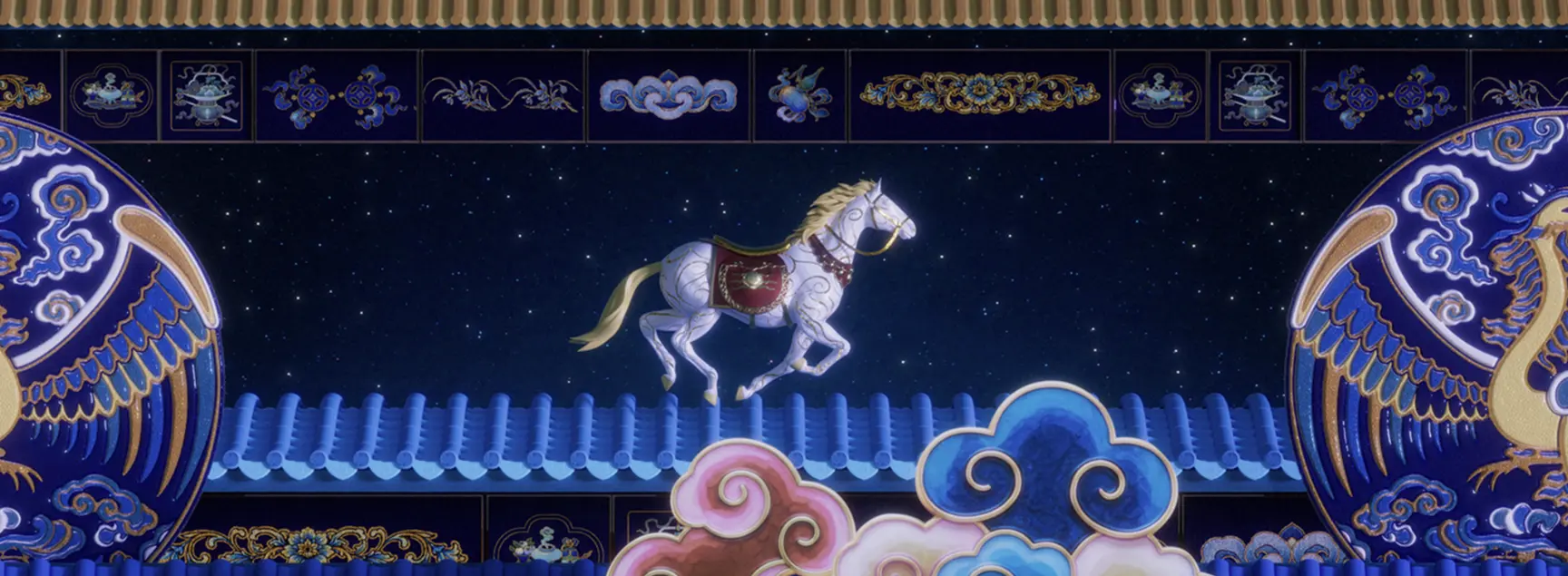
The Eternal Horse
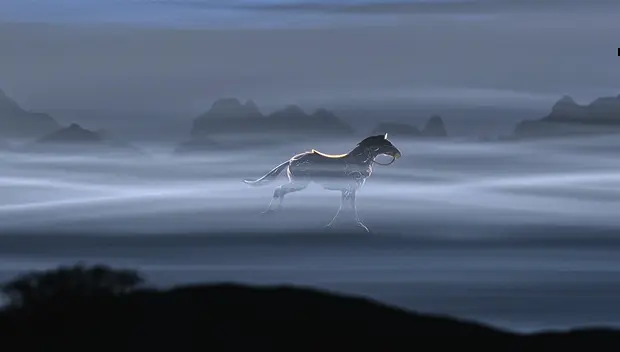
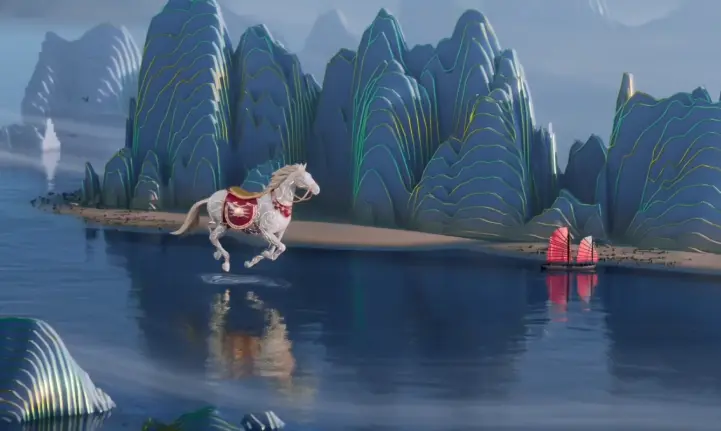
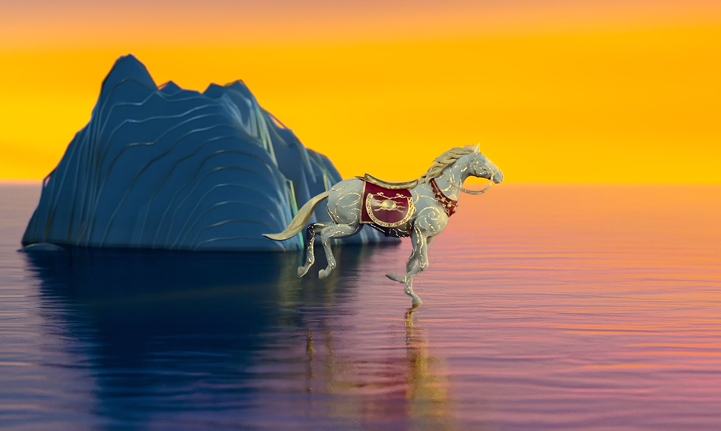
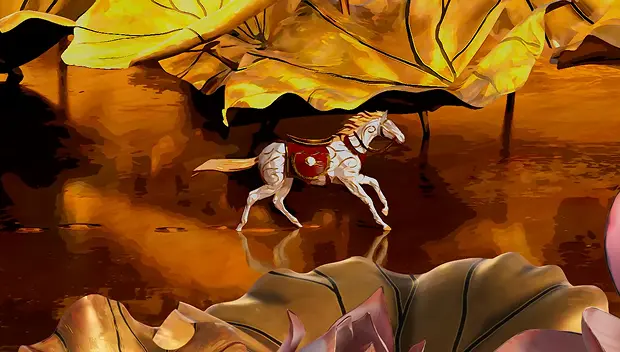
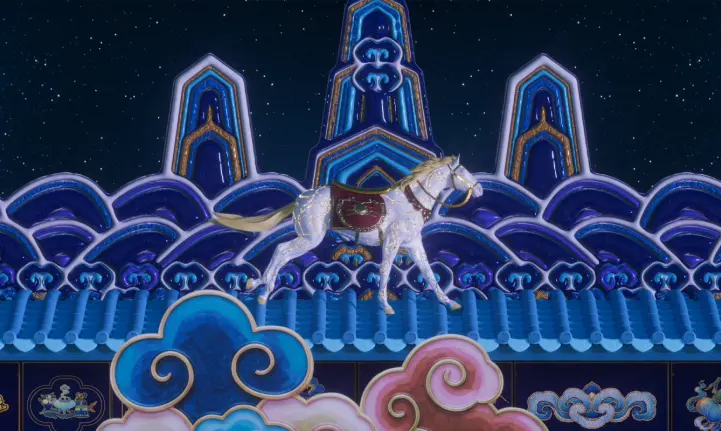
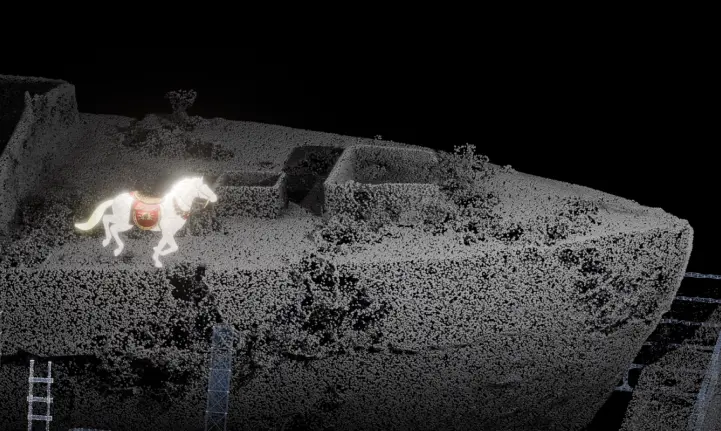
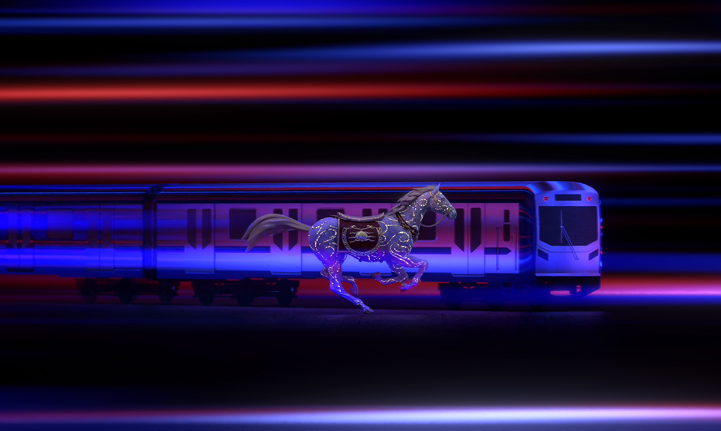
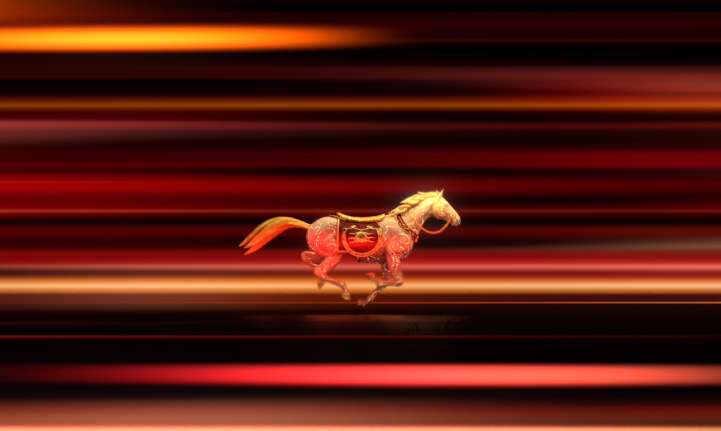
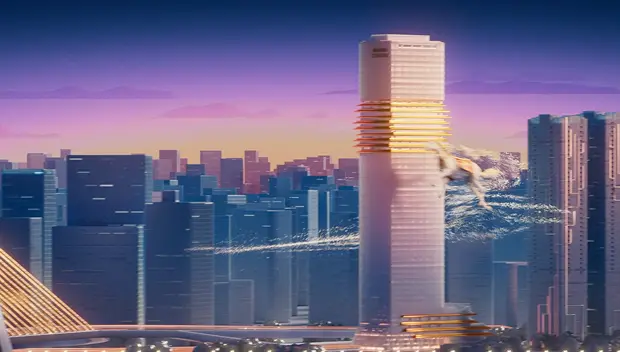
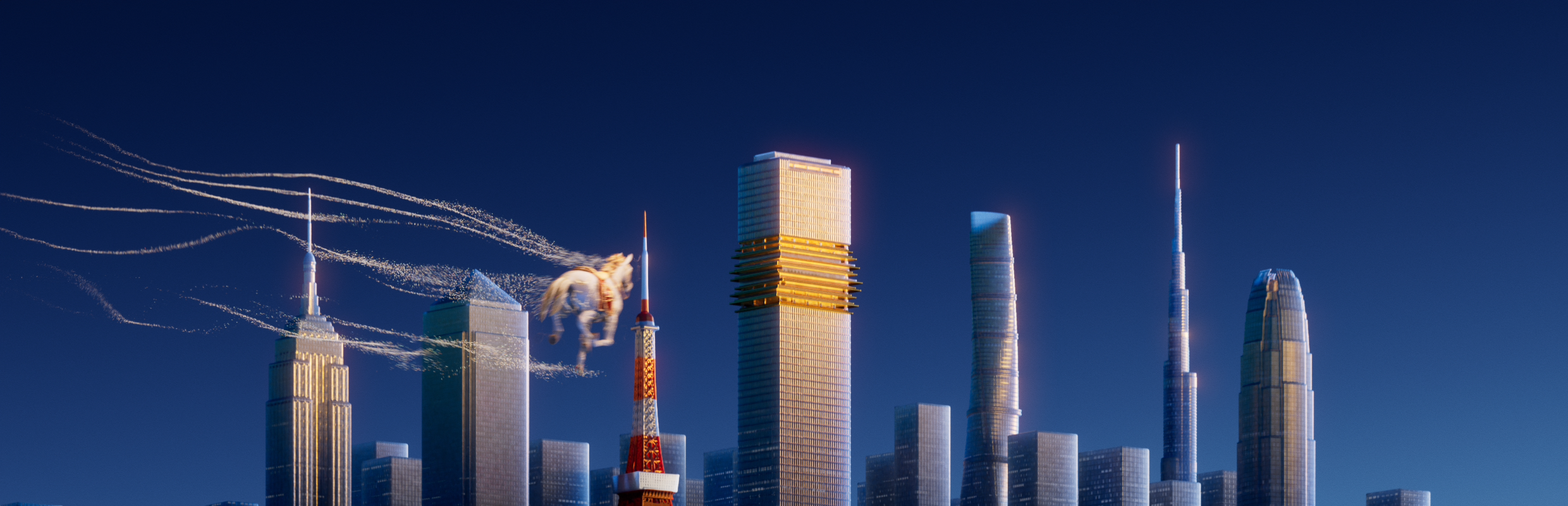

Nine chapters trace Vietnam from north to south, from Northern Mist, Ha Long Bay, Rice Terraces, and Lotus Pond to Hue Citadel, Ba Son Shipyard, the Metro Station, and Saigon Marina IFC, concluding with Saigon Marina IFC positioned alongside global landmarks.
Rendered as a singular, continuous three-dimensional form across hero zones and primary architectural surfaces, the White Horse becomes a stable reference point within the spatial field. Scale and clarity concentrate momentum. This work anchors the system and prevents dispersion. The myth is stabilized so it can be perceived anew.
Piece 2
Surface Metadata
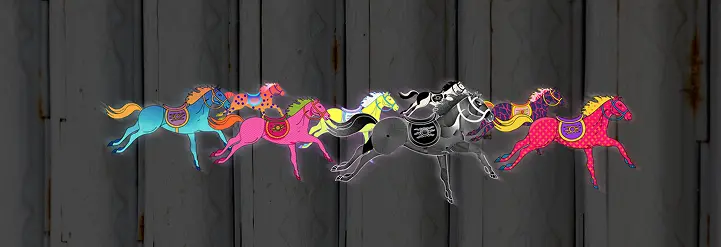
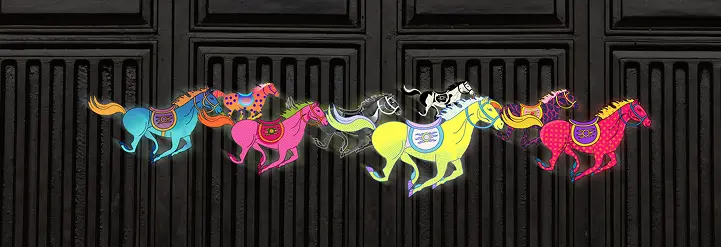
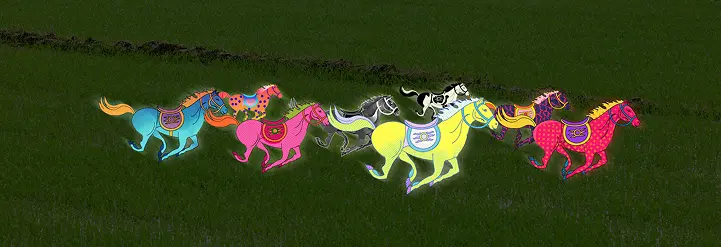
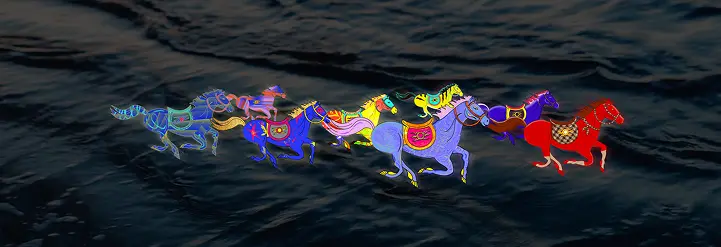
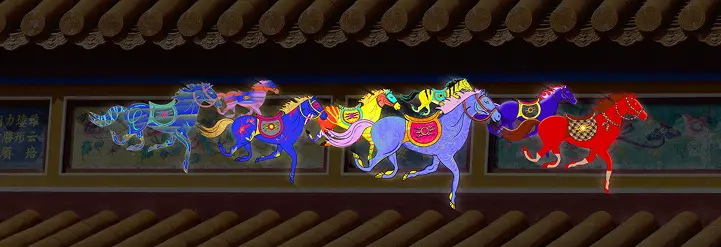
If Piece 1 defines the vertical axis, Piece 2 returns time to the ground.
Reinterpreting the spirit of Bát Mã Truy Phong through a contemporary lens, the work is constructed from 1,016 photographic textures, marking duration from 1010 to 2026. These surfaces, gathered across Vietnam, are shaped by use, erosion, and repetition. They privilege contact over overview.
A galloping herd of horses crosses this field, assembled from public contributions and animated through restrained two-dimensional motion. Selected textures respond with subtle digital activation, enhancing sensory presence without spectacle. Through participation, the White Horse expands.
Authorship disperses. Textures from Ba Son and Marina IFC are deconstructed, annotated, and mapped through exposed metadata, presented as process rather than elevated as object.








Piece 1 – "The Eternal Horse"
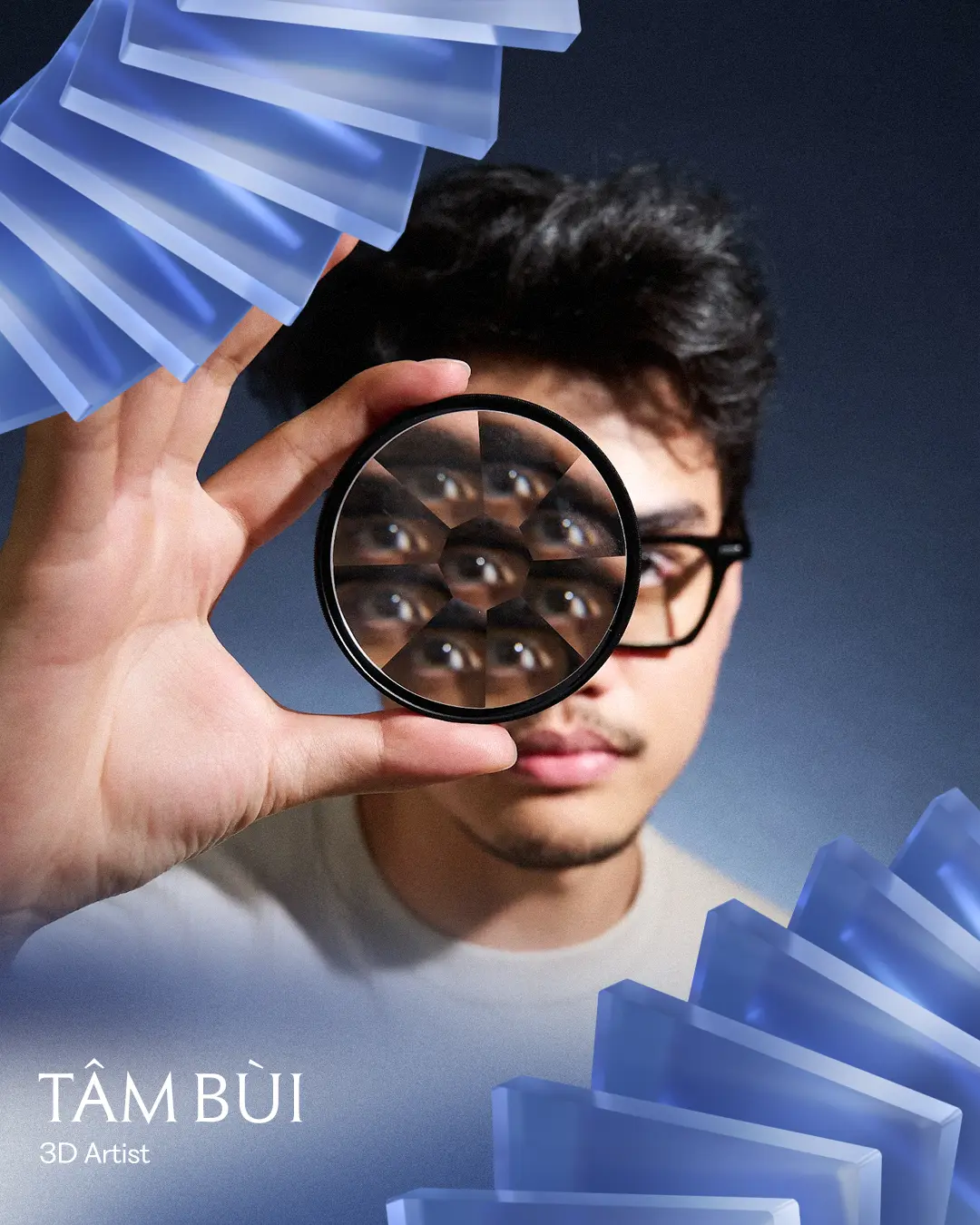
Tam Bui
3D Artist
Vietnam
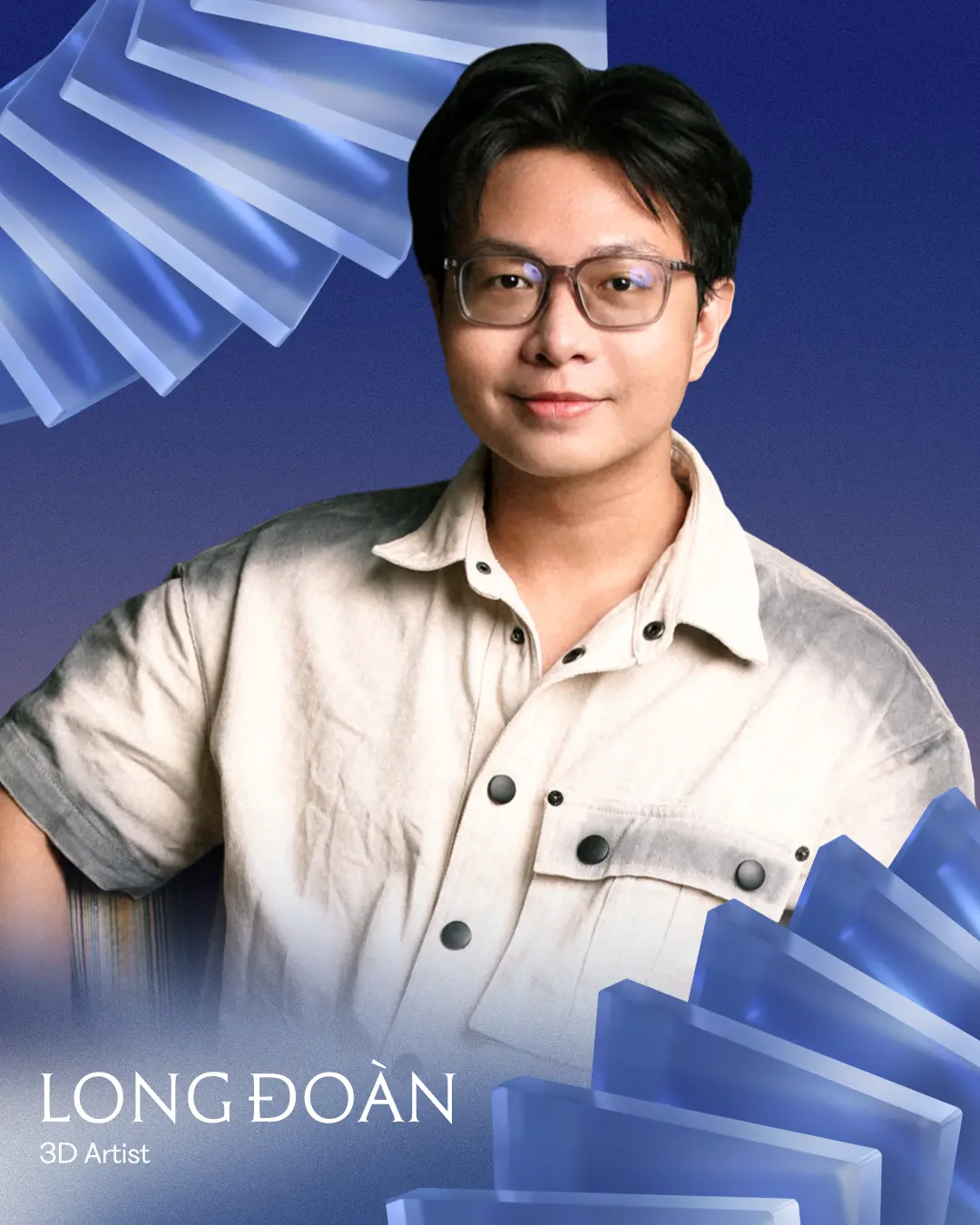
Long Doan
3D Artist
Vietnam
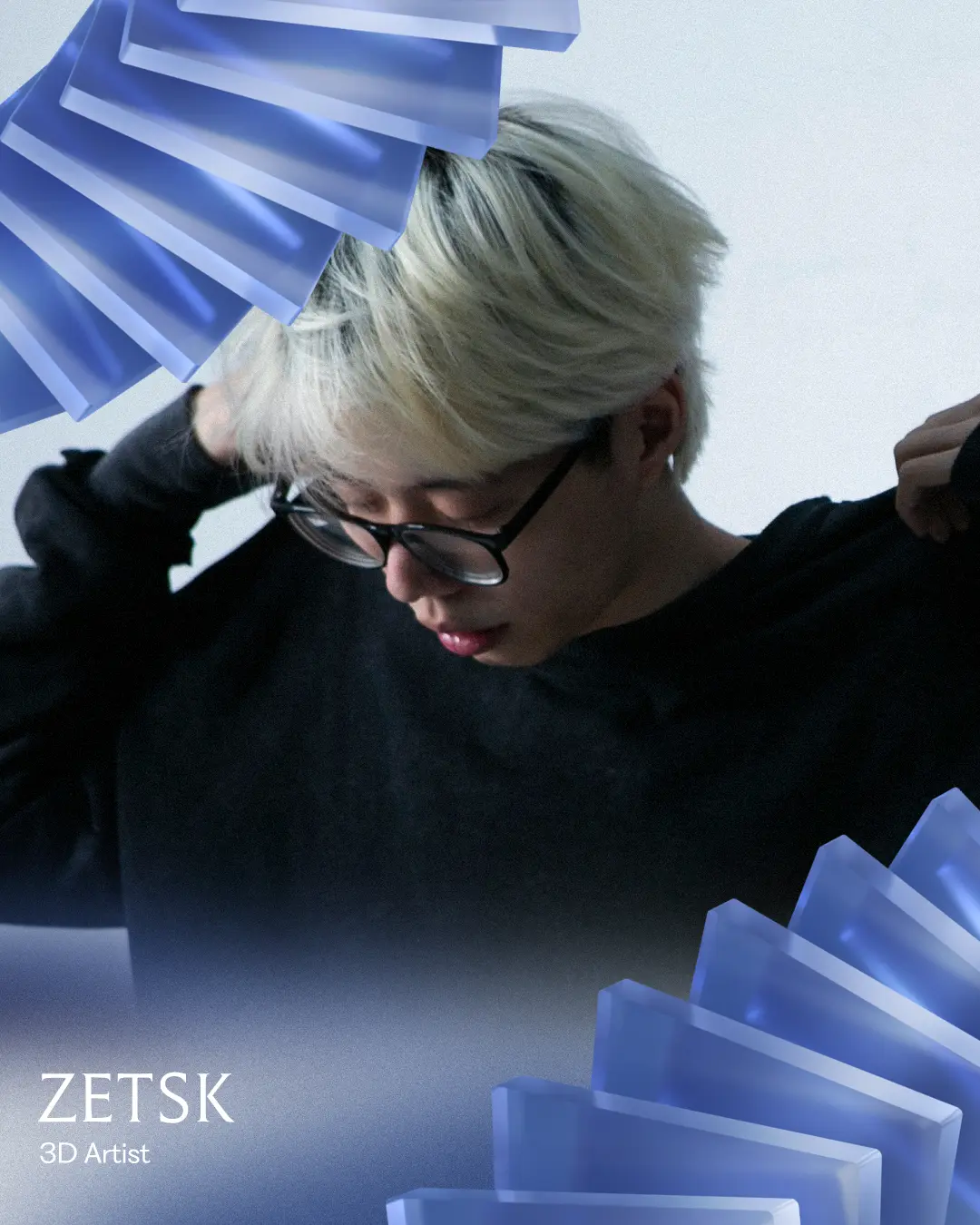
Zetsk
3D Artist
Vietnam
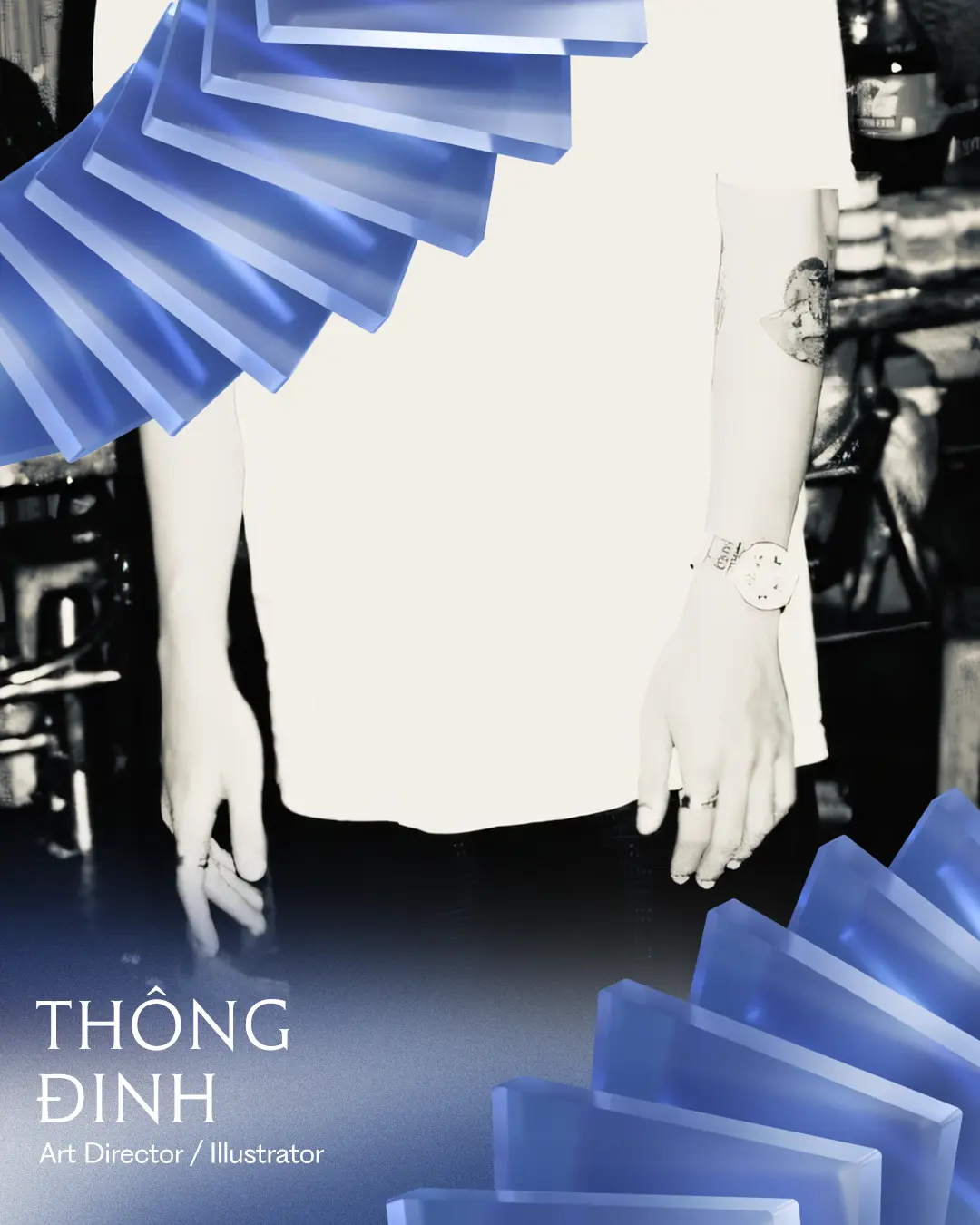
Thong Dinh
Illustrator
Vietnam
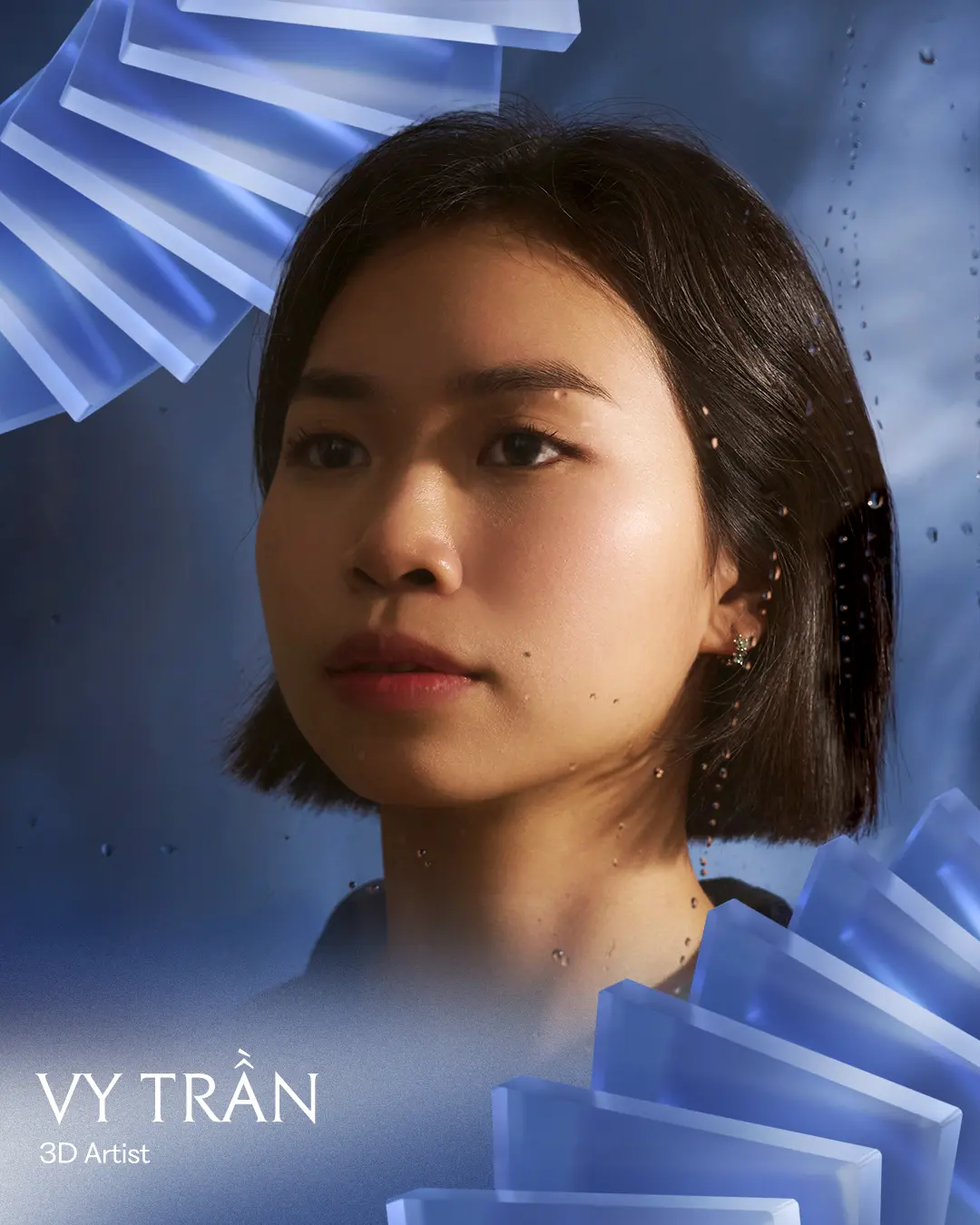
Vy Tran
3D Artist
Vietnam
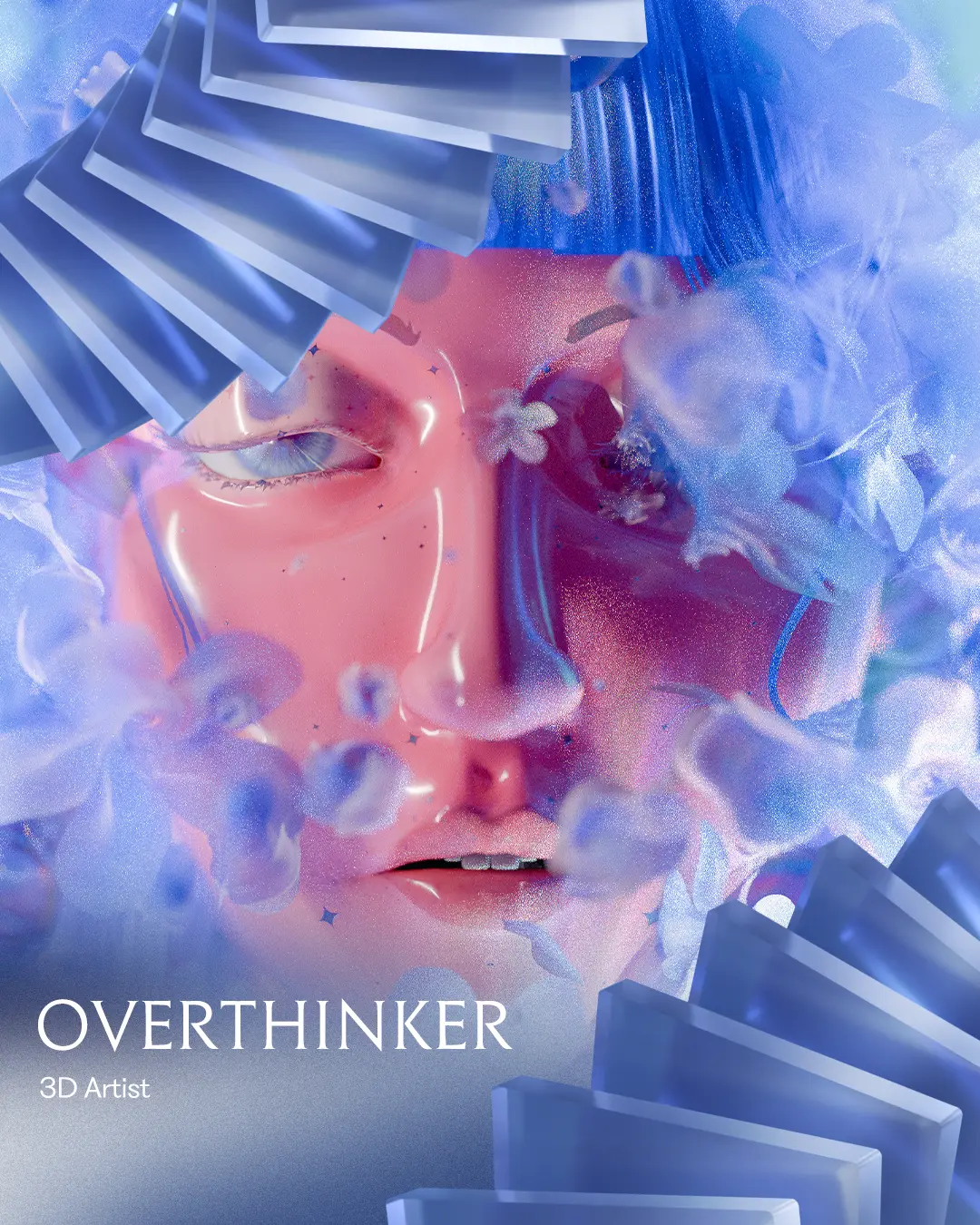
Overthinker
3D Artist
Vietnam
Piece 2 – "Surface Metadata"
Ling Tang
Photographer
Vietnam
Nguyn
Generative Visual Artist
Vietnam
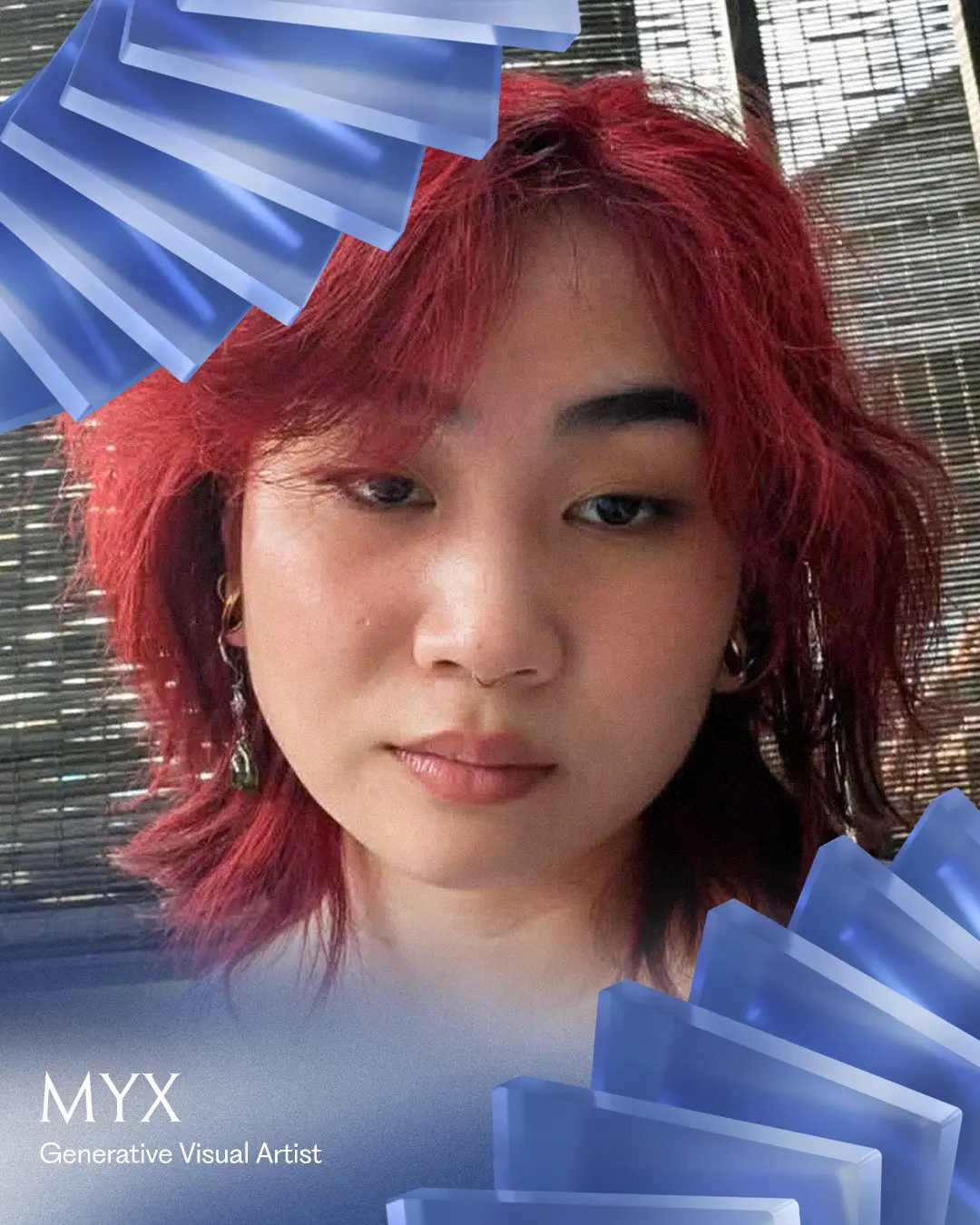
MYX
Generative Visual Artist
Vietnam
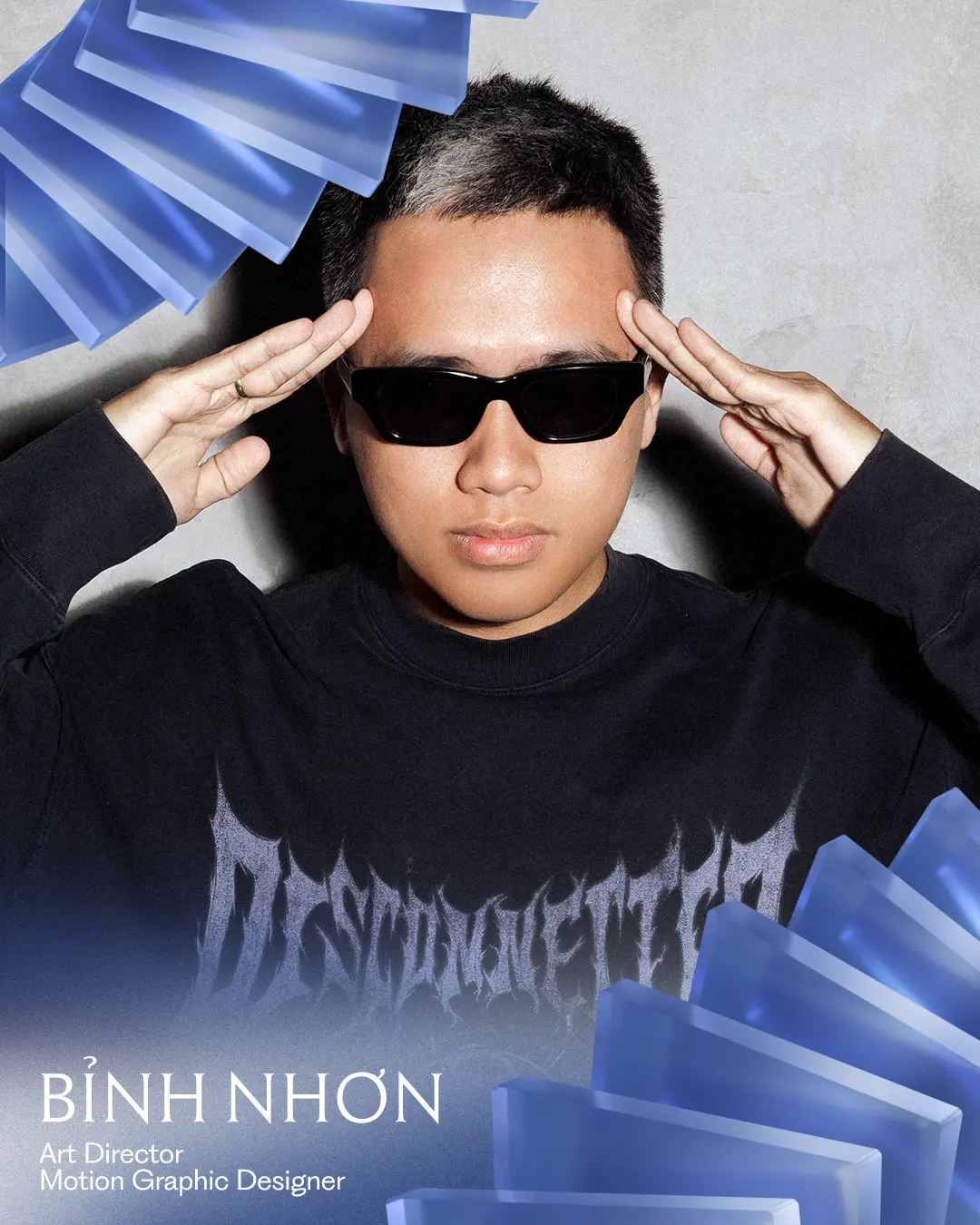
Lac Binh Nhon
Art Director
Motion Graphic Designer
Vietnam
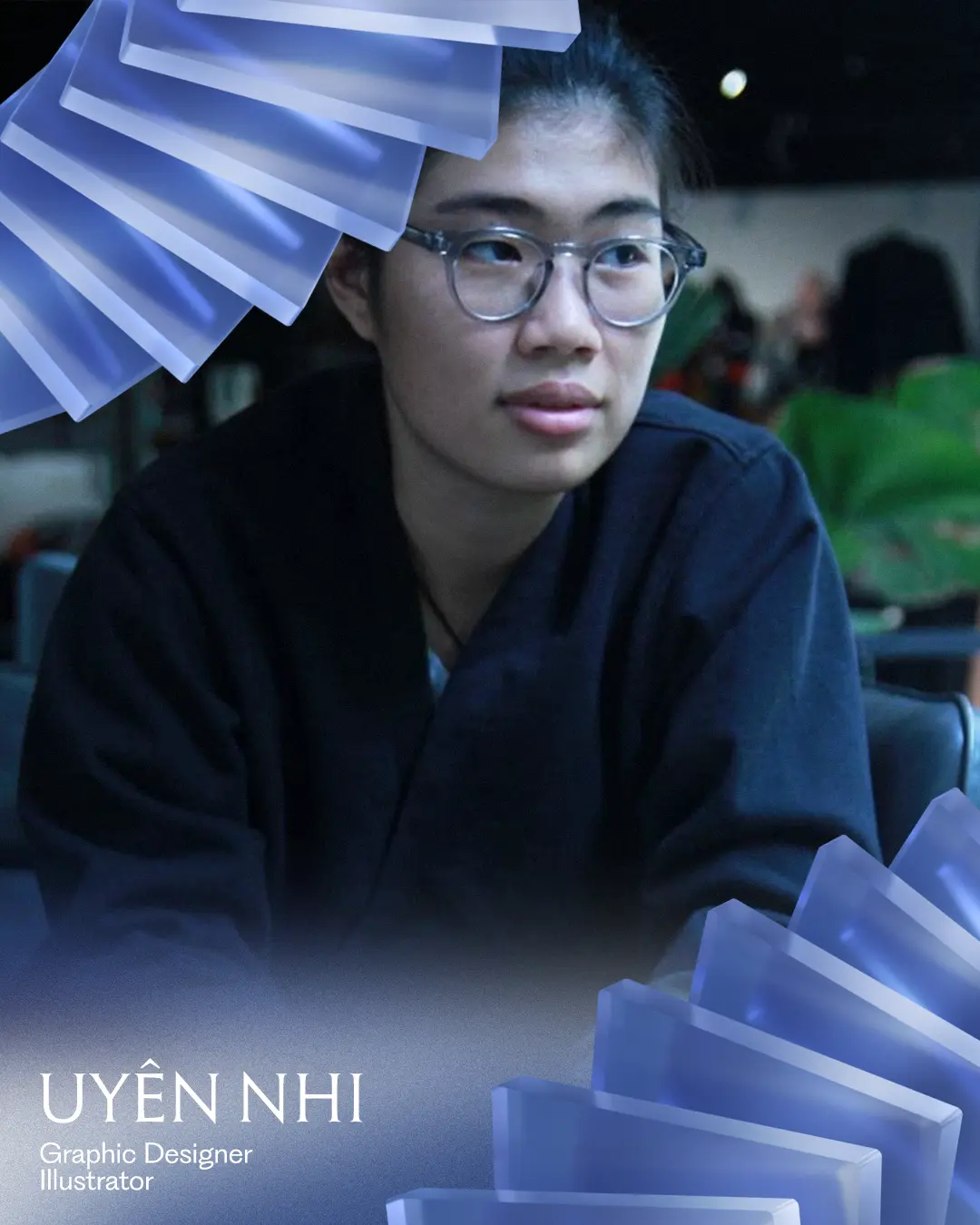
Uyen Nhi
Graphic Designer
Illustrator
Vietnam
Gia Tri
Graphic Designer
Illustrator
Vietnam
Epilogue
This exhibition initiates a long-term series dedicated to Vietnamese culture and creative power, aligning with Saigon Marina IFC’s vision of advancing toward the future through the depth of local heritage.